Decks, terraces, garden rooms, fences and lightweight outbuildings may not place the same loads on a foundation as a multi-storey building, but they still depend on stable and accurately positioned supports. Uneven settlement, poor alignment or insufficient anchoring can affect the entire structure above. Ground screws provide one way to create these support points without digging large holes or waiting for concrete to cure. Their effectiveness, however, depends on choosing suitable screws and installing them with enough control.
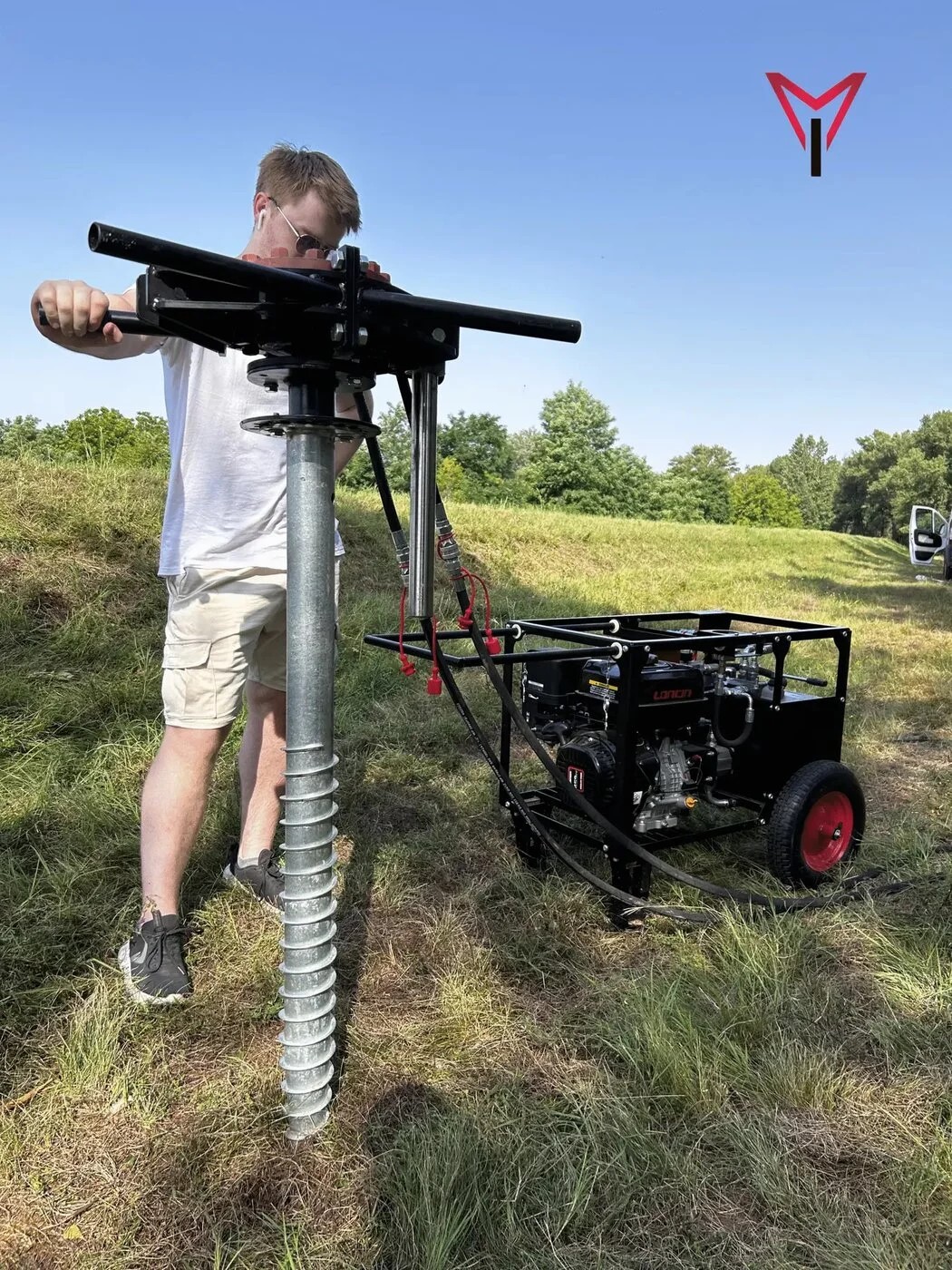
Contractors who handle this type of work regularly often use dedicated drivers rather than manual tools. Different equipment options can be compared at iron-mechanics.com/product-category/ground-screw-drivers/, where machines are designed around the installation of ground screws and related foundation elements. Powered equipment becomes particularly useful when the project includes many support points, larger screw diameters or soils that require more torque than a manual system can deliver. It also allows the crew to work at a more consistent pace throughout the day.
Why Ground Screws Fit Light Construction
Light structures often benefit from foundation systems that can be installed with limited disruption to the site. A timber deck, for example, may be built next to a finished house where the owner wants to preserve paving, lawn and landscaping. Excavating a series of concrete footings can create spoil that needs to be removed and may require additional restoration after the foundation work is finished. Ground screws reduce much of this activity because the steel element is rotated directly into the soil.
The method can also shorten the interval between foundation work and structural assembly. Concrete footings need time to reach sufficient strength before they can be fully loaded. Ground screws do not rely on curing, so construction can often continue once the installation has been checked and the required support conditions have been achieved. This can be useful on short projects where several separate visits would increase labor and transport costs.
Another advantage is adaptability. If a project layout changes before installation, the position of individual screws can sometimes be adjusted more easily than formed concrete foundations. That flexibility does not remove the need for accurate setting out, but it can simplify work on custom decks or garden structures where dimensions must fit around existing buildings and boundaries.
Ground screws are commonly considered for applications such as:
- raised timber decks and terraces;
- garden rooms and small cabins;
- fencing and gate posts;
- pergolas and lightweight shelters;
- modular utility structures;
- selected temporary installations.
Each application still requires an appropriate foundation design. A screw suitable for a small fence post should not automatically be used beneath a larger structure. Loads, spacing, screw geometry and soil conditions all need to be considered together.
Installation Starts With the Site
A successful installation begins before the driver is switched on. Contractors need to confirm where each support point will be placed and check whether underground utilities, drainage or other obstacles may affect the work. The installation area should also allow enough room for the machine and crew to move safely between points.
Soil conditions can change even across a small residential plot. One corner may contain compacted fill while another consists of softer natural soil. Resistance can also increase suddenly as the screw reaches deeper layers. These variations are one reason why powered installation equipment is valuable. A hydraulic driver can maintain steady rotational force as conditions change, while the operator monitors alignment and progress.
Access should be reviewed at the same time. A project may appear simple on a drawing but become difficult if the machine cannot pass through a narrow gate or around an existing building. Machine width, turning ability and operating reach can therefore be just as important as torque. Compact equipment is particularly useful where the installation points are located behind completed structures or close to landscaping.
Choosing the Right Installation Method
Not every light construction project requires a large machine. Small screws installed into easy ground conditions can sometimes be handled with portable equipment. The decision changes as screw size, project volume and soil resistance increase. Contractors should choose a method that gives them enough control without adding unnecessary complexity.
A practical selection process can follow several steps:
- Determine the expected structural loads and required foundation layout.
- Select ground screw dimensions that suit the design and soil conditions.
- Estimate the torque likely to be required during installation.
- Check whether the equipment can reach every installation point.
- Confirm that adapters and drive connections match the chosen screws.
- Plan how alignment and installation depth will be monitored.
- Review transport and setup requirements before arriving on site.
This sequence helps prevent a common mistake, which is choosing the machine first and then trying to make the project fit its limitations. Foundation requirements should guide equipment choice, not the other way around.
Professional contractors also need enough reserve capacity for unexpected conditions. If a driver operates at its maximum output on every installation, even a modest increase in soil resistance can stop progress. Some margin between normal demand and maximum machine capacity makes the work more predictable.
Accuracy Matters More Than Speed
Light structures may seem forgiving, but foundation positioning can affect nearly every stage that follows. If support points are out of line, beams and frames may need to be modified during assembly. Small errors in screw position can create extra cutting, packing or adjustment work above ground. These corrections take time and can reduce the visual quality of the finished structure.
A powered driver helps because it allows the operator to apply force more steadily. The pile or screw can be aligned before significant penetration begins, and corrections can be made while the element is still relatively shallow. Once a long screw has entered the soil at the wrong angle, repositioning becomes far more difficult.
Rotation speed should remain controlled. Ground screw installation is not a drilling contest, and rapid movement is not necessarily productive. The crew needs enough time to observe alignment, resistance and the behavior of the machine. Consistency usually produces better results than attempting to maximize speed at every foundation point.
The same principle applies when several workers are involved. Clear communication between the operator and the person checking alignment can prevent repeated adjustments. A well-organized team may install fewer screws in the first few minutes but complete the full project faster because mistakes are reduced.
Reducing Disturbance Around Finished Properties
Many deck and garden projects take place on occupied properties. Clients may be more concerned about damage to the lawn or patio than about the technical details of the machine itself. Contractors therefore need an installation method that works without turning a small foundation project into a large site operation.
Compact ground screw equipment can help limit the area affected by machine traffic. The crew still needs to protect vulnerable surfaces and consider ground conditions, but the required access route can be smaller than for a large excavator. Less excavation also means less soil piled around the work area and fewer vehicle movements for spoil removal.
This can have a direct effect on project cost. Restoring paving, turf or planting after heavy equipment has left the site can require additional labor and materials. If the foundation method reduces those secondary tasks, the saving may be significant even when the foundation elements themselves cost more than simple concrete footings.
Cleaner sites also make handover easier. Once the structure is complete, the client is less likely to be left with large areas that need repair. For contractors working on residential properties, this can influence how the overall quality of the job is perceived.
When Dedicated Equipment Becomes Worthwhile
A landscaping company that installs a few ground screws each year may have little reason to own a specialized machine. A contractor that builds decks, terraces or garden structures every week faces a different calculation. Regular rental fees, delivery charges and delays can gradually become more expensive than operating dedicated equipment.
Ownership can also make small jobs easier to accept. If a project requires only ten or fifteen foundation points, external machine mobilization may represent a large part of the total price. With suitable equipment already available, the contractor can schedule the job around its own workload and keep more of the installation process in-house.
Utilization remains the key factor. The machine needs enough work to justify maintenance, storage and transport costs. It should also fit the majority of the company’s projects rather than only the largest ones. A compact driver that can be used repeatedly may provide more value than a much larger machine that spends most of its time unused.
For light construction, the best equipment is rarely defined by maximum power alone. Contractors need a combination of sufficient torque, manageable size, accurate control and easy movement between projects. When these qualities match the company’s workload, ground screw installation can become a practical foundation method for structures that need reliable support without the disruption associated with extensive excavation.