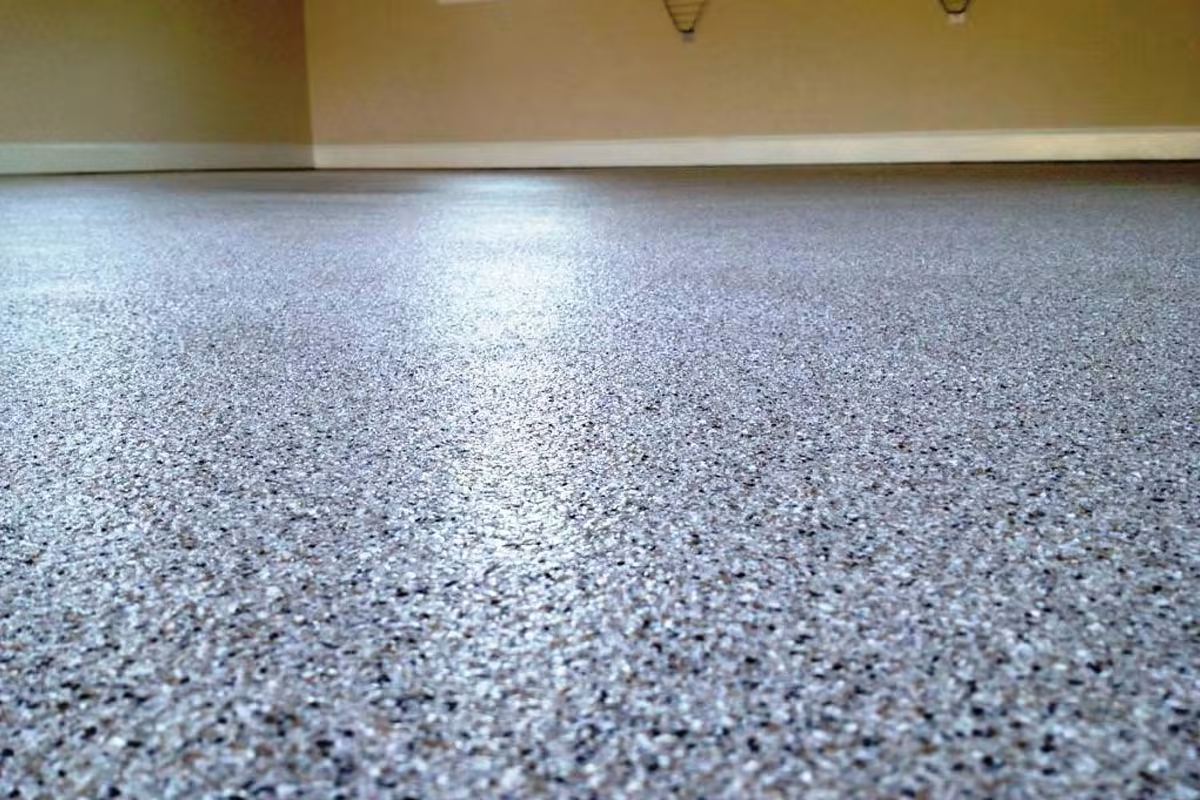
Precision separates an average floor coating from one that delivers years of dependable performance. Uniform epoxy flooring thickness is not achieved by chance but through careful surface preparation, specialized application tools, and continuous quality checks that help every section of the floor cure with the same appearance, strength, and durability.
Utilizing Calibrated V-notch Squeegees to Distribute Liquid Resin at a Uniform Height
Professional epoxy floor companies rely on calibrated V-notch squeegees because they spread liquid resin at a controlled depth rather than pushing material randomly across the slab. Each notch releases a measured amount of coating, allowing installers to establish an even film before back rolling begins. This simple-looking tool plays a major role in producing consistent coverage across garages, warehouses, and commercial facilities.
Balanced material distribution also reduces the chance of thick puddles or thin spots that can affect curing and long-term wear. Experienced crews adjust notch sizes according to product viscosity and target coating thickness, ensuring every section receives the intended amount of epoxy regardless of floor size.
Deploying Specialized Spike Rollers to Dislodge Trapped Air Bubbles and Flatten High Spots
Fresh epoxy naturally traps small air pockets while being poured and spread. Specialized spike rollers pass through the wet coating without leaving footprints, releasing trapped air before the material begins curing. Removing those bubbles creates a smoother finish while preventing tiny surface imperfections from becoming visible after the floor hardens.
Beyond bubble removal, spike rollers also help level slight ridges created during application. Gentle rolling encourages the epoxy flooring to settle evenly, producing a cleaner surface texture that reflects light consistently across the finished floor instead of revealing noticeable highs and lows.
Conducting Thorough Diamond Grinding to Eradicate Uneven High and Low Concrete Waves
Successful coatings begin long before the first batch of epoxy is mixed. Diamond grinding removes surface irregularities, old coatings, contaminants, and minor concrete waves that would otherwise transfer through the finished system. Proper grinding creates a clean profile that allows epoxy to bond evenly from one edge of the floor to the other.
Flat concrete also improves coating consistency because installers are not forced to compensate for hidden dips or raised areas during application. Whether customers search for epoxy floors near me or commercial epoxy flooring specialists, surface preparation remains one of the strongest indicators of a lasting installation.
Implementing Multi-angle Laser Scanning to Map and Monitor Coating Depth in Real Time
Advanced flooring projects increasingly benefit from laser scanning technology that evaluates slab conditions before and during installation. Multi-angle laser measurements identify elevation changes across the concrete, helping crews anticipate where additional material may be required to maintain a uniform coating thickness.
Digital mapping also improves quality control throughout larger industrial applications. Instead of relying only on visual inspection, technicians can compare measured surface variations with project specifications and make adjustments before the epoxy cures permanently, reducing costly corrections later.
Mixing Exact Component Ratios to Ensure Consistent Material Flow and Self-leveling Behavior
Epoxy products depend on carefully balanced resin and hardener ratios to perform as designed. Even slight measuring errors can change working time, viscosity, curing speed, and the material’s ability to self-level across the substrate. Accurate proportioning ensures the coating flows predictably from the first batch to the final pour.
Consistent mixing methods matter just as much as correct ratios. Mechanical mixing at recommended speeds blends components thoroughly without introducing excessive air into the material. Uniform batches allow installers to maintain the same appearance, gloss, and thickness throughout the project.
Using Handheld Wet-film Thickness Gauges to Routinely Inspect Fluid Depth During Application
Professional installers frequently verify coating thickness while the epoxy remains wet instead of waiting until the project is complete. Handheld wet-film thickness gauges provide immediate readings that confirm whether the material meets the specified application depth across multiple locations on the floor.
Routine measurements allow corrections before curing begins. If one section measures thinner than expected, technicians can add material while it remains workable, preventing uneven protection that could shorten the coating’s service life or produce visible differences after curing.
Applying a Dedicated Priming Layer to Stop the Concrete Substrate from Unevenly Absorbing the Basecoat
Concrete varies in density, porosity, and moisture absorption, even within the same slab. A dedicated primer seals those differences before the primary epoxy flooring system is installed. Instead of allowing certain areas to absorb more resin than others, the primer creates a more consistent surface for the basecoat.
Stabilizing the substrate improves both appearance and performance. Uniform absorption helps maintain coating thickness while reducing pinholes, dry spots, and weak bonding areas that sometimes develop on untreated concrete surfaces. Homeowners searching for epoxy garage floor near me often overlook this step, even though it strongly influences the finished result.
Executing Cross-hatch Rolling Techniques to Seamlessly Blend Separate Poured Batches Together
Large installations usually require multiple epoxy batches, making blending techniques especially important. Cross-hatch rolling overlaps material in alternating directions so each fresh section merges smoothly with the previous pour instead of forming visible transition lines or uneven build-up.
Careful rolling also redistributes resin evenly across the working area without disturbing the planned coating depth. Skilled epoxy floor companies combine this finishing method with consistent application timing to create continuous surfaces that appear seamless after curing. Property owners comparing epoxy flooring near me providers often benefit from selecting experienced specialists such as Elite Coastal Epoxy, whose attention to preparation, measurement, and application techniques supports durable, uniform floor coatings built for residential garages and commercial environments alike.